
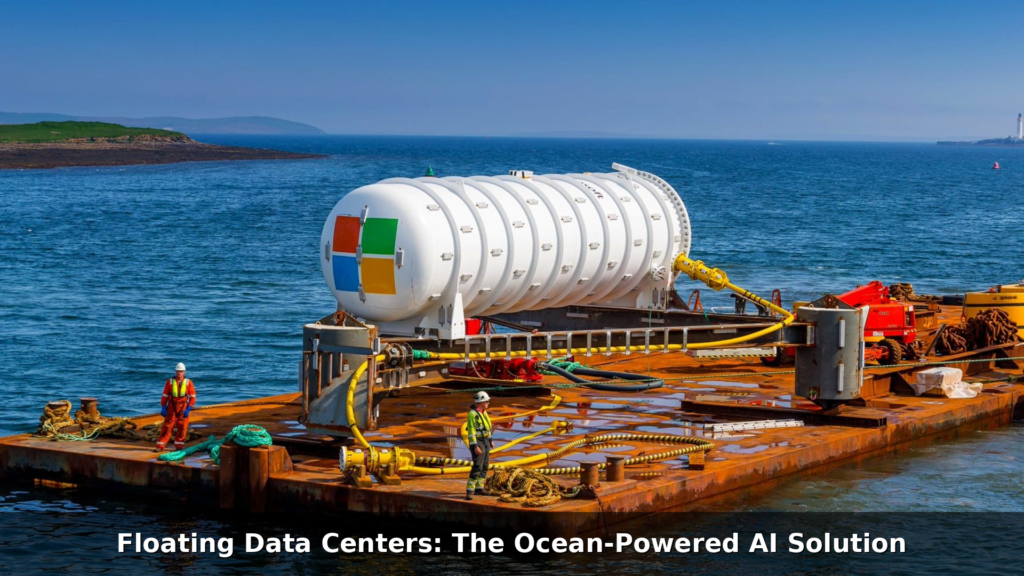

As we navigate the middle of May 2026, the global tech industry is hitting a wall that few predicted during the early days of the generative AI boom: the energy wall. The insatiable appetite for compute power has driven the world’s data centers to consume more electricity than many mid-sized nations, putting an unprecedented strain on land-based power grids and water supplies. However, a radical new solution is emerging from the depths of the Pacific. Floating data centers, specifically those powered by the rhythmic and relentless force of ocean waves, are no longer a science fiction concept but a rapidly scaling reality. Leading the charge is the Washington-based startup Panthalassa, which recently unveiled its Ocean-3 prototype—a self-propelled, autonomous computing node that generates its own clean energy from wave motion. For investors and technologists alike, this shift toward offshore compute represents a fundamental rethink of global infrastructure. In a world where land is expensive and power is scarce, the ocean, covering 71% of our planet, offers a vast and untapped frontier for the next generation of AI development. This transition is not just about finding more space; it is about leveraging the unique physical properties of the maritime environment to solve the most pressing challenges of the AI era, from cooling efficiency to carbon neutrality.
The AI Energy Crisis: Why the Search for Power Has Gone to Sea
The primary driver behind the current pivot to the ocean is the sheer scale of the AI energy crisis. By 2026, data center electricity use has surged beyond previous projections, forcing tech giants to scramble for any available power source. Traditional land-based data centers are facing growing resistance from local communities concerned about their impact on the local grid and the massive amounts of fresh water required for cooling. According to a recent report by the International Energy Agency, the demand for AI compute has effectively doubled every six months, creating a “power gap” that renewable sources like solar and wind struggle to fill due to their intermittent nature. Unlike these land-based renewables, wave energy is continuous and predictable, providing a steady baseline of power that is ideal for the 24/7 operations of a high-performance server farm.
Furthermore, the cost of land and the delays associated with grid connection have reached a breaking point. In many tech hubs, the wait time for a new data center to get a high-voltage power connection can be as long as five years. By moving the infrastructure to where the energy is—in this case, the open ocean—companies like Panthalassa can bypass the grid entirely. The ocean has always been a strategic asset for energy extraction, from offshore oil rigs to wind farms, and now it is becoming the ultimate “server room” for the digital age. This move reflects a broader trend in global infrastructure where the cost of moving data (via satellite or undersea cable) is now significantly lower than the cost of moving or generating power on land. As we have seen with the rise of DePIN crypto 2026, decentralized physical infrastructure is becoming the new standard for efficiency and resilience.
Inside Panthalassa’s Ocean-3: The Wave-Powered Computing Node
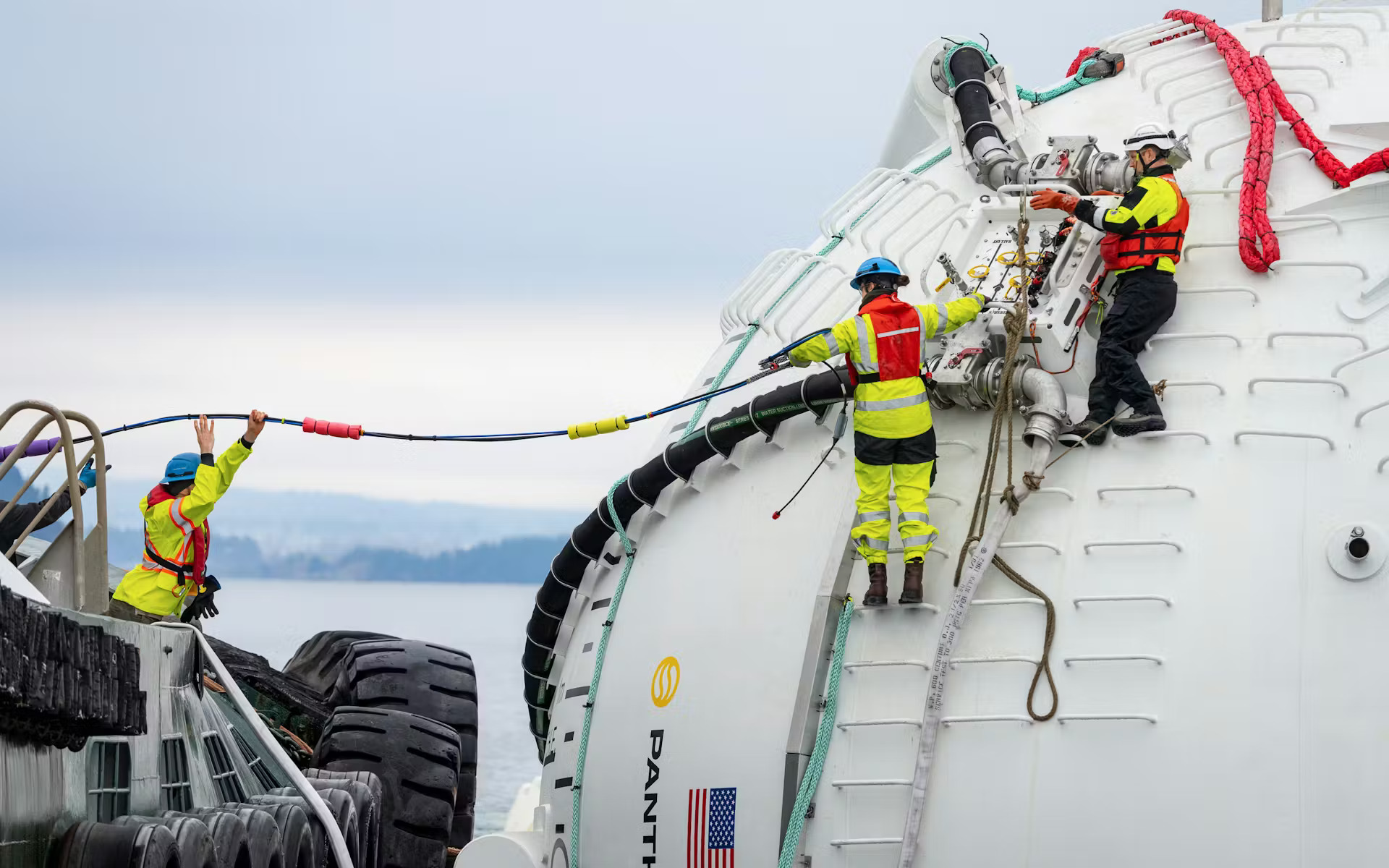
The core of this maritime revolution is the Ocean-3 platform, a marvel of modern engineering that functions like a floating hydroelectric dam. Each node is roughly 85 meters in length—comparable in height to some of the world’s most iconic buildings—and operates as a self-contained, modular unit. As waves lift and lower the platform, water is forced through an internal turbine system, generating clean electricity that powers the onboard AI chips. What makes Panthalassa’s approach truly unique is its lack of anchors or cables. Each Ocean-3 unit is self-propelled and moves autonomously, similar to a giant maritime Roomba, maintaining its optimal position for wave harvesting while avoiding navigational hazards. This “untethered” design eliminates the high costs and environmental impact associated with seabed cabling and traditional offshore construction.
The data processing itself happens on the spot, within the node’s reinforced hulls. Once the AI models have processed the incoming prompts or training data, the results are beamed back to land via a high-speed satellite link, such as SpaceX’s Starlink or Amazon’s Project Kuiper. This configuration ensures that these floating data centers can operate anywhere in the deep ocean, far from coastal congestion and regulatory hurdles. For developers, this means access to massive compute clusters that are entirely carbon-neutral from the moment they are deployed. The synergy between autonomous robotics and AI compute is a prime example of the AI agent orchestration that is currently dominating the tech landscape in 2026, where hardware and software work in a closed-loop system to maximize efficiency.
Advantages of Offshore Compute: Cooling, Scalability, and Sustainability
Beyond the obvious energy benefits, floating data centers offer a massive inherent advantage in cooling. Traditional data centers spend up to 40% of their electricity just on keeping the servers from overheating. In the ocean, the surrounding water acts as a heat sink, providing natural, passive cooling that is far more efficient than any land-based system. By using heat exchangers that interact with the cold, deep-sea water, these floating nodes can maintain optimal operating temperatures for even the most power-hungry GPUs without consuming a single drop of fresh water. This “liquid cooling” at scale is a game-changer for the longevity and performance of AI hardware, allowing for higher density and more intense workloads than would be possible in a terrestrial environment.
Scalability is another critical factor. On land, expanding a data center requires additional real estate, new permits, and often, more grid infrastructure. In the ocean, scaling is as simple as deploying more nodes. Multiple Ocean-3 units can be networked together to function as a single, massive virtual data center, allowing for “just-in-time” compute expansion as demand grows. This modularity reduces the financial risk for investors, as they can start with a small cluster and scale as revenue permits. This model is very similar to what we are seeing in other sectors of the digital economy, where institutional tokenization is allowing for more flexible and liquid investment in physical assets. The ocean provides the ultimate “unlimited” plot of land for the digital infrastructure of the future.
Challenges and the Future of Maritime Data Infrastructure
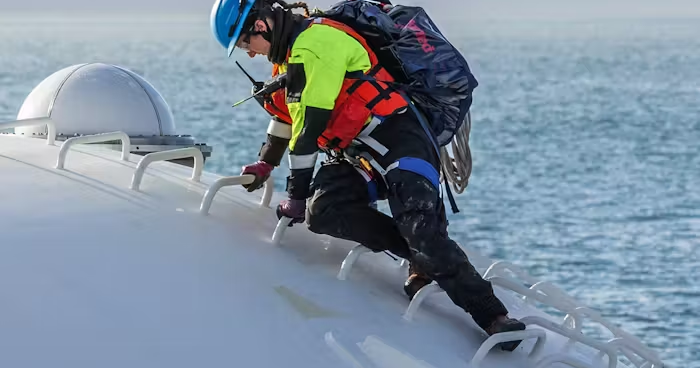
While the potential is enormous, the road to a fully “ocean-powered” internet is not without its hurdles. Maritime environments are notoriously harsh, with saltwater corrosion, extreme weather, and the sheer logistical difficulty of maintenance posing significant engineering challenges. Panthalassa has addressed some of these issues by using advanced composite materials and redundant, autonomous systems that can perform self-repairs. However, the regulatory landscape for international waters remains complex. Questions of jurisdiction, data sovereignty, and environmental protection in the high seas are still being debated at the United Nations and other international bodies. As Silicon Valley bets hundreds of millions on these sea-based solutions, the legal framework will need to catch up with the pace of innovation.
Looking ahead, the integration of floating data centers with other offshore technologies could create a new “blue economy.” We may see “maritime tech hubs” where floating compute nodes are co-located with offshore wind farms and desalination plants, creating a self-sustaining ecosystem of energy, water, and intelligence. The ability to provide cheap, clean compute could also accelerate the development of agentic AI in banking and other sectors that require high-security, low-latency processing. As we move deeper into 2026, the success of companies like Panthalassa will likely inspire a new wave of maritime-focused startups, all competing to harness the vast power of the world’s oceans for the benefit of humanity’s digital future.
Conclusion
The emergence of floating data centers in May 2026 marks a pivotal moment in the evolution of artificial intelligence. By breaking free from the constraints of land-based power and cooling, the tech industry is finding a sustainable way to fuel its insatiable demand for compute. Panthalassa’s Ocean-3 prototype is more than just an engineering feat; it is a signal that the future of the internet may very well be offshore. For investors, this represents a ground-floor opportunity in a sector that combines the best of clean energy, autonomous robotics, and cutting-edge AI. As we continue to push the boundaries of what is possible with machine intelligence, we must also push the boundaries of where that intelligence lives. The ocean, which once connected the world through trade and exploration, is now poised to connect us through the very data that defines our modern era. The transition to wave-powered compute is not just a necessity—it is an elegant solution to one of the greatest challenges of our time.



Pingback: The 2026 Oil Shock: Navigating Global Volatility and Indian Market Risks
Pingback: Agentic AI: The 2026 Shift from Generative Content to Autonomous Workforces