


Introduction: Navigating the Decentralized Frontier
When we begin Exploring Crypto’s Full Spectrum, we must look past the daily price charts and examine the underlying fusion of mathematics, hardware, and human behavior. Decentralized networks operate on a sophisticated framework where trust is established not by centralized institutions, but by secure, distributed software. By understanding this complete spectrum, market participants can better evaluate the true utility of various digital assets and the networks they power.
This exploration begins at the protocol level, where cryptographic algorithms secure transactions and establish consensus. From there, we transition to the physical infrastructure—specifically the high-performance computing hardware that processes these complex calculations. Finally, we analyze the broader market dynamics and the institutional key players who drive capital allocation, liquidity, and regulatory discussions on a global scale.

The Cryptographic Foundation: Core Algorithms and Consensus
At the absolute core of blockchain technology lies cryptography. Without secure cryptographic algorithms, decentralized ledgers would be vulnerable to double-spending and unauthorized modifications. These mathematical functions ensure that once a transaction is written to the ledger, it becomes virtually immutable. The system relies on public-key cryptography to verify ownership and digital signatures to authorize transfers securely across the network.
To maintain a single version of truth without a central coordinator, networks utilize consensus mechanisms. The most prominent consensus models include:
- Proof of Work (PoW): Requires participants to expend computational energy to solve complex mathematical puzzles, securing the network through physical resource expenditure.
- Proof of Stake (PoS): Replaces energy-intensive mining with validators who lock up a portion of their native tokens as collateral to validate transactions and propose new blocks.
- Delegated Proof of Stake (DPoS): Introduces a voting system where token holders elect a select group of delegates to secure the network on their behalf, optimizing throughput.
These mechanisms govern how nodes agree on the state of the ledger, directly influencing the security, speed, and decentralization of the underlying network.
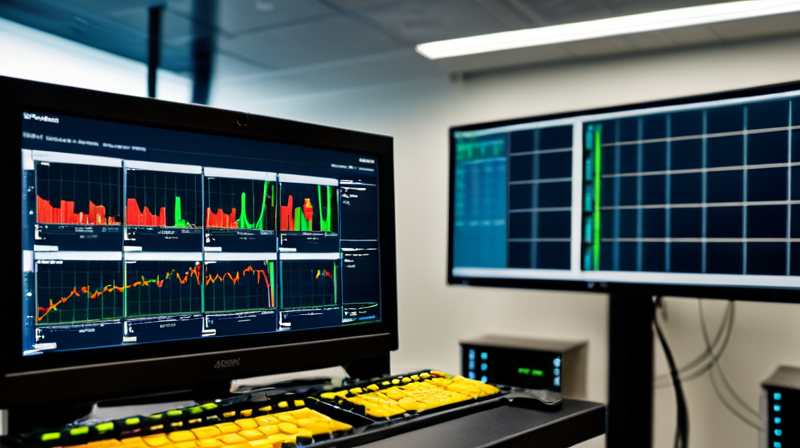
The Hardware Engine: GPUs, ASICs, and the Infrastructure Powerhouse
The theoretical beauty of cryptographic algorithms relies entirely on physical hardware to run. In the early days of decentralized mining, standard consumer central processing units (CPUs) were sufficient. However, as network difficulty scaled, the demand for parallel processing power skyrocketed. This shift brought graphics processing units (GPUs) and Application-Specific Integrated Circuits (ASICs) to the forefront of network validation.
A prime example of this hardware evolution is seen in Nvidia Corporation, an American multinational technology company headquartered in Santa Clara, California. Founded in 1993 by Jensen Huang, Chris Malachowsky, and Curtis Priem, Nvidia originally focused on GPUs for video games. However, their massive investment in the early-to-mid 2000s to develop CUDA—a software platform and API that enabled GPUs to run massively parallel programs—unexpectedly positioned them as a vital infrastructure provider for early mining operations and modern artificial intelligence workloads alike. Today, high-performance computing clusters remain the backbone of global decentralized security.
Market Dynamics: Liquidity, Volatility, and Valuation
Moving from the technical foundation to the financial layer, we encounter the complex market dynamics that govern digital asset pricing. Unlike traditional equity markets with centralized clearinghouses and set trading hours, decentralized asset markets operate continuously, 24/7, across hundreds of global exchanges. This constant activity creates unique liquidity patterns and heightened volatility, as sentiment can shift rapidly across different time zones.
Valuing these assets requires a different analytical framework than traditional discounted cash flow models. Analysts look at on-chain metrics, such as active wallet addresses, transaction volume, and network hash rate, to gauge organic adoption. Additionally, macro factors—such as interest rate decisions, regulatory updates from bodies like the SEC, and institutional custody integration—play a substantial role in driving capital inflows and outflows, ultimately shaping the long-term price discovery process.
Key Players: Venture Capital, Founders, and Institutional Drivers
The trajectory of the decentralized ecosystem is heavily influenced by prominent builders, institutional investors, and venture capitalists. These key players provide the early-stage funding and strategic guidance necessary to scale raw protocols into global financial platforms. Their investment theses often dictate which sectors—such as decentralized finance (DeFi), layer-2 scaling solutions, or privacy-focused networks—receive the capital required to mature.
Among the influential figures in the venture capital space is Peter Thiel, the German-American entrepreneur and venture capitalist. A co-founder of PayPal, Palantir Technologies, and Founders Fund, Thiel has long been known for backing transformative, contrarian technologies. His early-stage venture funds and investment philosophies have consistently highlighted the disruptive potential of decentralized systems, drawing parallel attention from institutional allocators who view these assets as alternative stores of value or hedges against traditional monetary policies.
Frequently Asked Questions
What is the difference between Proof of Work and Proof of Stake?
Proof of Work relies on physical computational power and energy consumption to secure the network, whereas Proof of Stake relies on validators who lock up native cryptocurrency as collateral to validate transactions.
Why are GPUs important for decentralized networks?
GPUs are designed for highly parallel processing, making them incredibly efficient at solving the repetitive mathematical puzzles required by certain cryptographic algorithms and mining protocols.
How do venture capitalists influence the development of digital assets?
Venture capitalists provide critical early-stage funding, technical advisory, and institutional credibility to development teams, helping them scale experimental protocols into mainstream financial infrastructure.
Conclusion: Key Takeaways for Investors
Exploring Crypto’s Full Spectrum reveals that the decentralized ecosystem is far more than a speculative playground; it is a complex convergence of mathematics, hardware, and global finance. From the cryptographic algorithms that secure the ledger to the high-performance computing hardware that processes transactions, every layer is interconnected. As institutional capital and veteran investors continue to allocate resources to this space, understanding these foundational components becomes vital for long-term strategic planning.
For investors looking to navigate this landscape, success lies in balancing technical analysis with an understanding of macroeconomic trends. By keeping a close eye on infrastructure developments, regulatory updates, and the movements of prominent venture funds, you can build a more resilient and informed approach to digital assets. Stay ahead of the curve by analyzing the technology first, and the market dynamics will naturally become much clearer.
Editorial Note
Articles published on Finvestech.in are researched using reputable public sources, official announcements, regulatory publications, industry reports, and other credible references.
Artificial Intelligence is used to assist with research, drafting, structuring, language refinement, and editorial workflows. Every article is subsequently reviewed, verified, and refined to improve clarity, accuracy, readability, and overall usefulness before publication.
Our objective is to provide educational, practical, and well-researched content that helps readers better understand finance, investing, artificial intelligence, technology, cryptocurrency, automation, and digital business.
The information published on Finvestech.in is intended solely for educational and informational purposes and should not be interpreted as financial, investment, legal, tax, or professional advice. Readers should always conduct their own research and consult qualified professionals before making important financial or business decisions.