
Practical Context & Target Architecture for DePIN Compute
Direct answer: The design and long-term viability of these tokenomic systems are central to their potential but represent a complex and rapidly evolving field (Frontiers | Decentralized physical infrastructure networks (DePIN) tokenomics). While these economic structures facilitate network scaling, the underlying reliance on physical hardware introduces significant security considerations.
DePIN compute networks operate through a structural framework defined by the “DePIN Flywheel,” a pattern grounded in a Burn-and-Mint Equilibrium. Within this economic model, network demand is effectively monetized through the issuance of fiat-denominated usage credits. The design and long-term viability of these tokenomic systems are central to their potential but represent a complex and rapidly evolving field (Frontiers | Decentralized physical infrastructure networks (DePIN) tokenomics). While these economic structures facilitate network scaling, the underlying reliance on physical hardware introduces significant security considerations.
Hardware Vulnerabilities and System-Level Exposure
Malware targets vulnerabilities in software to exploit systems, escalate privileges, extract data, or execute malicious code (A study of hardware architecture based attacks to bypass operating system security). Over time, both hardware and software have evolved, as have their vulnerabilities (A study of hardware architecture based attacks to bypass operating system security). It is difficult to trace vulnerabilities in hardware primarily due to complex architecture and difficulties in observing the effects of operations performed across the system (A study of hardware architecture based attacks to bypass operating system security).
This technology is experimental and not baseline, as it does not work in some widely used browsers. Developers must check the browser compatibility table carefully before using this in a production environment (Compute Pressure API – Web APIs | MDN). By balancing the established token-based economic equilibrium with a proactive stance on hardware security and the validation of experimental web technologies, network architects can better navigate the complexities inherent in decentralized infrastructure management.
System Requirements & Hardware Architecture Prerequisites
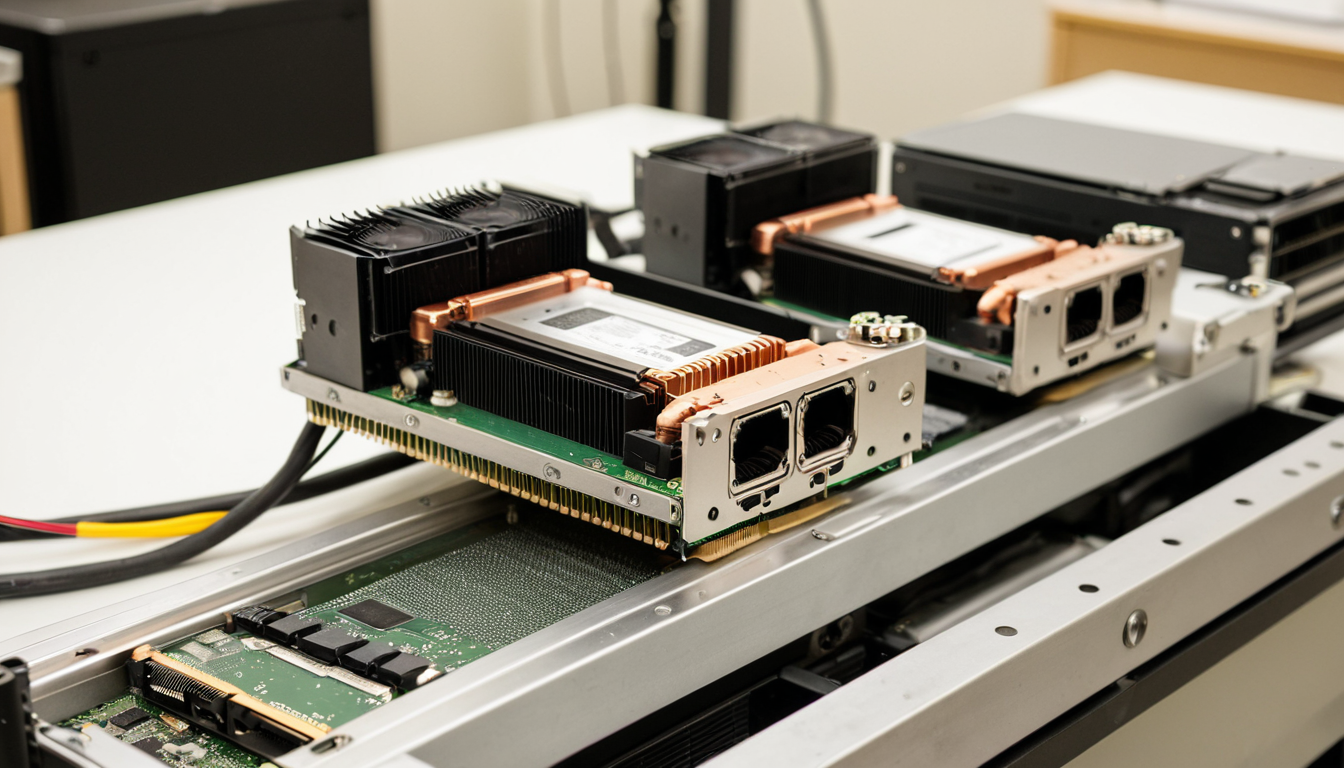
Decentralized Physical Infrastructure Networks (DePIN) use crypto-economic incentives to orchestrate the crowdsourced deployment and operation of real-world infrastructure (Frontiers | Decentralized physical infrastructure networks (DePIN) tokenomics). These networks rely on a lineage of public blockchain technology that utilizes cryptographic timestamping to generate tamper-evident, append-only records. This architectural foundation ensures that the contributions made by various nodes remain verifiable and secure within the decentralized system. For instance, an overview of a quantum computer from an engineer’s perspective highlights basic operations such as qubit initialization, manipulation, and readout (Quantum Computer Hardware and Architecture—An Overview | Springer Nature Link).
High-Performance Computing Infrastructure and Verification
To extend the current limits of complex computational tasks, such as massively parallelized tensor network state (TNS) algorithms, developers must deploy high-performance computing (HPC) infrastructure that integrates advanced hardware and software technologies (Massively Parallel Tensor Network State Algorithms on Hybrid CPU-GPU Based Architectures – PubMed). Novel algorithmic solutions and implementation details are presented to extend current limits of TNS algorithms on HPC infrastructure (Massively Parallel Tensor Network State Algorithms on Hybrid CPU-GPU Based Architectures – PubMed).
Benchmark results from large-scale density matrix renormalization group (DMRG) simulations on single node multiGPU NVIDIA A100 systems have addressed problems on Hilbert space dimensions up to 4.17 × 1035 (Massively Parallel Tensor Network State Algorithms on Hybrid CPU-GPU Based Architectures – PubMed). This feature is not baseline and does not work in some of the most widely-used browsers (Compute Pressure API – Web APIs | MDN).
Workflow Orchestration, Tokenomics & Integration Architecture
Decentralized physical infrastructure networks (DePIN) deploy crypto-economic incentives to orchestrate the crowdsourced deployment and operation of real-world infrastructure (Frontiers | Decentralized physical infrastructure networks (DePIN) tokenomics). The core of these systems is the “DePIN Flywheel” pattern, which is grounded in a Burn-and-Mint Equilibrium. In this model, network demand is effectively monetized through the creation of fiat-denominated usage credits, which are generated by burning the network’s native token.
Despite the potential of this architecture, the literature highlights significant operational challenges, including the impact of token price volatility on provider economics, the difficulty of ensuring resilient incentive alignment, the necessity of generating sufficient non-speculative demand, and the complexities of navigating regulatory uncertainty (Frontiers | Decentralized physical infrastructure networks (DePIN) tokenomics). Scaling these decentralized networks requires overcoming critical limitations in current hardware architectures, specifically constraints related to memory capacity, computational efficiency, and interconnection bandwidth.
Hardware-Aware Model Co-Design: The DeepSeek-V3 Benchmark
The DeepSeek-V3 model, trained on 2,048 NVIDIA H800 GPUs, serves as a vital case study, demonstrating how hardware-aware model co-design can effectively address these bottlenecks to enable cost-efficient training and inference at scale (Insights into DeepSeek-V3: Scaling Challenges and Reflections on Hardware for AI Architectures). Practical implementations of scaling strategies in DePIN networks involve utilizing existing underutilized hardware, which can reduce costs by up to 80% compared to traditional cloud providers (DePIN Providers | 0G Documentation).
Furthermore, developers managing these distributed environments may deploy the Compute Pressure API to monitor system states; however, this remains an experimental technology, and teams must check the browser compatibility table carefully before attempting to deploy it in production environments (Compute Pressure API – Web APIs | MDN).
Operational Trade-Offs, Governance & Failure Modes
Token price volatility frequently impacts provider economics, creating challenges for maintaining resilient incentive alignment within decentralized physical infrastructure networks (Frontiers | Decentralized physical infrastructure networks (DePIN) tokenomics). These systems must navigate significant regulatory uncertainty and the difficulty of generating sufficient non-speculative demand to sustain operations (Frontiers | Decentralized physical infrastructure networks (DePIN) tokenomics). The rapid scaling of large language models (LLMs) has unveiled critical limitations in current hardware architectures, including constraints in memory capacity, computational efficiency, and interconnection bandwidth (Insights into DeepSeek-V3: Scaling Challenges and Reflections on Hardware for AI Architectures).
The world needs more compute, as AI models are doubling in size every few months and GPU waitlists stretch for quarters (AI DePIN: The Complete Guide to Decentralized AI Infrastructure). Managing these networks requires addressing specific performance bottlenecks, such as those encountered in massively parallelized tensor network state (TNS) algorithms designed for high-performance computing, which focus on the interplay of quantum and classical simulation (Massively Parallel Tensor Network State Algorithms on Hybrid CPU-GPU Based Architectures – PubMed).
Low-Precision Units and Interconnect Convergence
Hardware-aware model co-design, such as the approach used by DeepSeek-V3 with 2,048 NVIDIA H800 GPUs, can mitigate these scaling challenges to enable cost-efficient training and inference (Insights into DeepSeek-V3: Scaling Challenges and Reflections on Hardware for AI Architectures). Future hardware directions include precise low-precision computation units, scale-up and scale-out convergence, and innovations in low-latency communication fabrics (Insights into DeepSeek-V3: Scaling Challenges and Reflections on Hardware for AI Architectures). However, service quality may vary due to unexpected pressure from external factors or concurrent applications.
Governance must balance these physical hardware constraints with the economic requirements of network participants to ensure long-term stability.
Evaluation Paradigms & Performance Benchmark Telemetry
Researchers have utilized large-scale density matrix renormalization group (DMRG) simulations on single-node multi-GPU NVIDIA A100 systems to assess strongly correlated molecular systems, successfully addressing Hilbert space dimensions up to 4.17 × 1035 (Massively Parallel Tensor Network State Algorithms on Hybrid CPU-GPU Based Architectures – PubMed). Beyond raw compute, the industry is currently investigating future hardware directions, including precise low-precision computation units, innovations in low-latency communication fabrics, and the convergence of scale-up and scale-out architectures (Insights into DeepSeek-V3: Scaling Challenges and Reflections on Hardware for AI Architectures).
Tokenomics represent a critical layer of network viability, yet their design remains a complex and rapidly evolving field (Frontiers | Decentralized physical infrastructure networks (DePIN) tokenomics). Developers must navigate significant operational trade-offs, as literature consistently highlights challenges regarding the impact of token price volatility on provider economics (Frontiers | Decentralized physical infrastructure networks (DePIN) tokenomics). The design and long-term viability of their tokenomic systems are central to their potential but represent a complex and rapidly evolving field, requiring careful consideration of incentive alignment and non-speculative demand (Frontiers | Decentralized physical infrastructure networks (DePIN) tokenomics).
System-Level Telemetry and Visibility Boundaries
Network security and data integrity present distinct challenges due to the inherent complexity of distributed hardware architectures. It is difficult to trace vulnerabilities in hardware primarily because of the complex nature of these systems and the difficulty in observing the effects of operations performed across the network (A study of hardware architecture based attacks to bypass operating system security). When evaluating physical infrastructure and hardware nodes, engineers must account for these visibility limitations. Effective telemetry must therefore capture system-level operations to mitigate risks, even while acknowledging that current architectural designs often obscure the precise origins of security vulnerabilities.
Strategic Enterprise Adoption Considerations
Decentralized physical infrastructure networks deploy crypto-economic incentives to orchestrate the deployment and operation of real-world hardware (Frontiers | Decentralized physical infrastructure networks (DePIN) tokenomics). For enterprise adoption, the primary strategic consideration involves balancing the need for compute capacity against the inherent complexities of decentralized governance and token-based economic models (Frontiers | Decentralized physical infrastructure networks (DePIN) tokenomics). Organizations must evaluate whether the current limitations in hardware architecture—such as constraints in memory capacity, computational efficiency, and interconnection bandwidth—align with their specific workload requirements (Insights into DeepSeek-V3: Scaling Challenges and Reflections on Hardware for AI Architectures).
Because these networks rely on crowdsourced deployment, infrastructure reliability and security remain central challenges, particularly as hardware-based attacks continue to evolve to bypass operating system security (A study of hardware architecture based attacks to bypass operating system security). Architectural decisions should prioritize hardware-aware co-design to address bottlenecks in training and inference at scale, similar to strategies used in high-performance computing environments (Insights into DeepSeek-V3: Scaling Challenges and Reflections on Hardware for AI Architectures).
Architectural Priorities for Enterprise Implementation
Developers must also account for operational trade-offs, including the difficulty of observing and tracing hardware vulnerabilities within complex, distributed systems (A study of hardware architecture based attacks to bypass operating system security). While these networks offer a path to scale compute capacity beyond the limitations of centralized hyperscalers, the long-term viability of their tokenomic systems remains a complex field requiring ongoing monitoring (Frontiers | Decentralized physical infrastructure networks (DePIN) tokenomics; AI DePIN: The Complete Guide to Decentralized AI Infrastructure).
Future adoption will likely depend on innovations in communication fabrics and low-precision computation units, as these are identified as potential future hardware directions in broader discussions with academic and industry peers (Insights into DeepSeek-V3: Scaling Challenges and Reflections on Hardware for AI Architectures).
References & Regulatory Sources
- Massively Parallel Tensor Network State Algorithms on Hybrid CPU-GPU Based Architectures – PubMed
- Frontiers | Decentralized physical infrastructure networks (DePIN) tokenomics
- Insights into DeepSeek-V3: Scaling Challenges and Reflections on Hardware for AI Architectures
- Quantum Computer Hardware and Architecture—An Overview | Springer Nature Link
- Compute Pressure API – Web APIs | MDN
- A study of hardware architecture based attacks to bypass operating system security
- AI DePIN: The Complete Guide to Decentralized AI Infrastructure
- DePIN Providers | 0G Documentation
Editorial Disclosure & Disclaimer: Editorial Disclosure & Disclaimer: This article is published solely for informational, educational, and analytical purposes and does not constitute personalized financial, investment, legal, or tax advice. Past performance is no guarantee of future results, and financial markets carry inherent risks. Consult a licensed financial advisor or certified professional before executing any financial transactions or investment decisions.
Editorial Note
Articles published on Finvestech.in are researched using reputable public sources, official announcements, regulatory publications, industry standards bodies, and primary reference documentation.
Artificial Intelligence is used to assist with research synthesis, drafting, data structuring, and initial composition. Every article is reviewed, fact-checked, and refined under human editorial direction to ensure clarity, analytical rigor, and factual integrity before publication.
The information published on Finvestech.in is intended solely for educational, analytical, and informational purposes and should not be interpreted as financial, investment, legal, tax, or professional advice. Readers should always conduct their own independent research and consult licensed professionals before making financial or business decisions.