
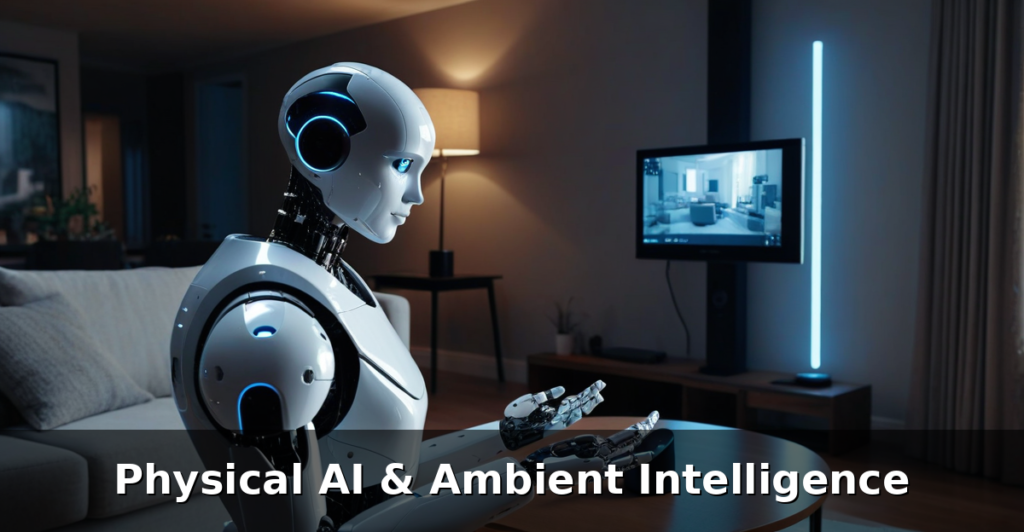

From Digital Screens to Physical Spaces: The Emergence of Embodied AI
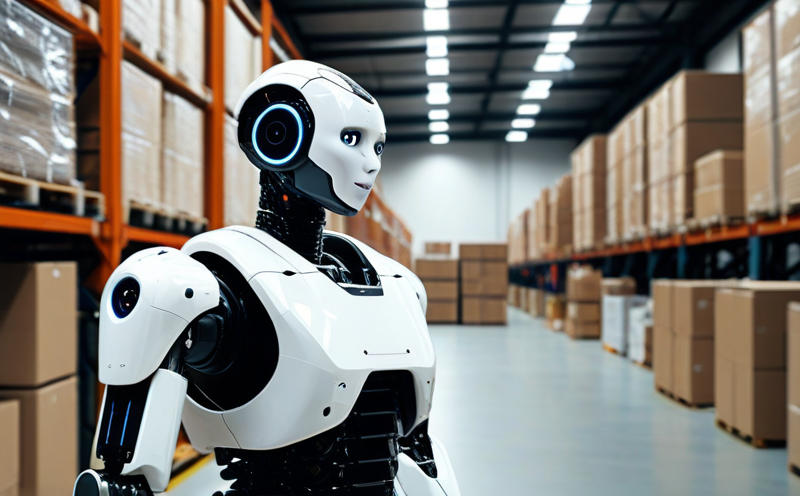
For the past few years, our interaction with artificial intelligence has been largely confined to text boxes and voice prompts. However, in 2026, the focus has shifted toward embodied AI—systems that possess a physical presence and the ability to manipulate their surroundings. Embodied AI vs digital-only systems represent a fundamental leap in capability; where a digital assistant might tell you how to organize a warehouse, a physical AI system can autonomously navigate the aisles, identify inventory, and optimize space in real-time. This transition is powered by advancements in sensor fusion, multi-modal learning, and high-fidelity spatial mapping. We are seeing humanoid robots and autonomous mobile robots (AMRs) becoming standard fixtures in industrial settings, moving beyond simple repetitive tasks to complex human-robot collaboration that requires a deep understanding of physical laws and social cues.
Ambient Intelligence: The Zero UI Revolution in Smart Environments
While physical AI focuses on action, ambient intelligence (AmI) focuses on awareness. Ambient intelligence for smart environments refers to electronic ecosystems that are sensitive, responsive, and adaptive to the presence of people. In 2026, the goal is “Zero UI”—the elimination of traditional menus and buttons in favor of natural interactions like gestures, presence, and context-aware responses. Imagine a smart office that adjusts lighting and temperature based on your circadian rhythm and occupancy patterns, or a retail space that provides personalized assistance the moment you show interest in a product. This era of AI agent orchestration ensures that these systems work in harmony, creating a seamless experience that feels less like technology and more like a helpful, invisible companion. The key to successful ambient computing lies in its ability to remain unobtrusive until it is needed, providing value without demanding attention.

Edge Computing and Neuromorphic Chips: Powering the Physical AI Boom
The massive computational requirements of physical AI and ambient systems cannot be handled by the cloud alone. The latency involved in sending data to a remote server and waiting for a response is unacceptable for a robot navigating a crowded floor or a car making split-second decisions. This has led to a surge in on-device AI processing for privacy and performance. Central to this movement is the adoption of specialized hardware. If you want to understand the technical backbone of this revolution, it’s worth exploring how neuromorphic computing is revolutionizing edge AI. These brain-inspired chips allow for ultra-low power consumption and real-time learning at the edge, enabling physical AI systems to operate autonomously for extended periods without being tethered to a power source or a high-speed data connection. This hardware evolution is what makes the vision of ubiquitous, always-on AI a practical reality in 2026.
The Economic Impact: ROI of Physical AI in Logistics and Healthcare
Businesses are no longer asking “if” they should adopt physical AI, but “how fast.” The ROI of physical AI in business 2026 is becoming increasingly evident, particularly in high-stakes industries. In logistics, autonomous physical systems are reducing operational costs by up to 40% through enhanced efficiency and reduced error rates in last-mile delivery and warehouse management. In healthcare, ambient monitoring systems are transforming patient care by detecting early signs of deterioration or falls without the need for invasive sensors. This shift is also creating a new market for agentic AI in banking and finance, where physical assets are tracked and valued in real-time through IoT and AI integration. The ability to bridge the gap between digital data and physical assets is unlocking trillions of dollars in hidden value, making physical AI a cornerstone of the modern global economy.
Privacy and Regulation: Navigating the EU AI Act in an Always-On World
With intelligence embedded everywhere, the questions of privacy and security have never been more critical. May 2026 marks a turning point for global tech as the EU AI Act implementation reaches a critical phase. Companies must now navigate strict transparency and bias audit requirements for any AI system that interacts with the public or makes high-stakes decisions. This regulation is pushing the industry toward privacy-by-design, where on-device processing and data minimization are not just features but legal necessities. Developers of ambient intelligence systems must ensure that their “always-on” sensors do not infringe on individual rights, leading to the development of sophisticated anonymization techniques and local-only learning models. Balancing the incredible benefits of physical AI with the fundamental right to privacy is the defining challenge for tech leaders and policymakers in this new era.
The rise of physical AI and ambient intelligence marks the final step in the integration of technology into human life. By moving AI out of the digital box and into our physical reality, we are creating a world that is more responsive, efficient, and supportive. While the challenges of regulation and technical complexity remain, the potential for these systems to improve human productivity and quality of life is unparalleled. As we move forward into 2026, the most successful organizations will be those that can effectively harness the power of embodied and ambient systems to create value that is both tangible and transformative. The age of invisible intelligence is here, and it is changing everything.