
# The Agentic AI Revolution: Reshaping Technology in 2026
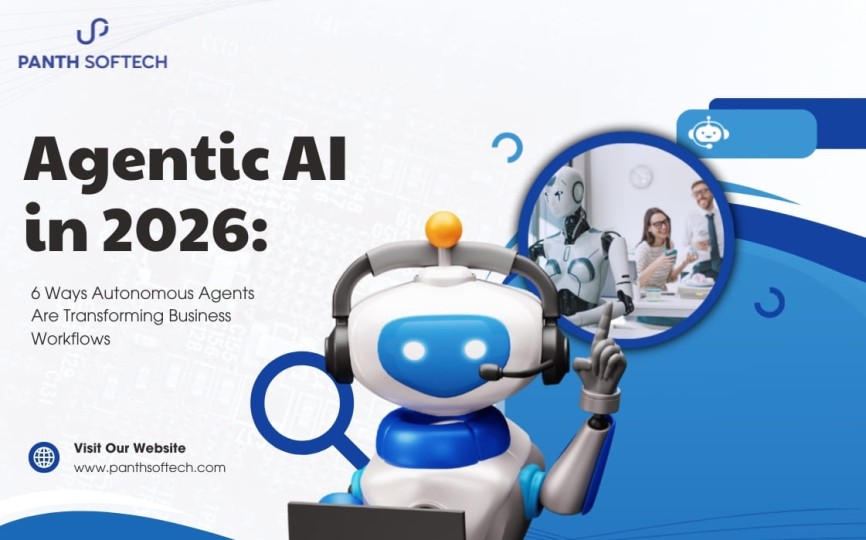
As we move through the second quarter of 2026, the artificial intelligence landscape has shifted from simple conversational models to a more profound and capable paradigm: **Agentic AI**. This shift represents a fundamental rewiring of how we interact with technology, moving from tools that respond to our prompts to autonomous systems that execute complex workflows on our behalf.
## What is Agentic AI?
Agentic AI refers to artificial intelligence systems that possess “agency”—the ability to set goals, plan tasks, and interact with other software and systems autonomously. Unlike the “copilots” of 2024 and 2025, which required constant human oversight and step-by-step guidance, today’s agents can handle end-to-end processes with minimal intervention.
In April 2026, we’ve seen the success rate of these agents in real-world tasks skyrocket to over 77%, a massive leap from the 20% success rates seen just a year ago.
## Key Trends Driving the Agentic Web
### 1. The Rise of Persistent AI “Coworkers”
Major technology players have embraced the agentic model. Adobe, for example, recently rebranded its Experience Cloud to “CX Enterprise,” an AI-first platform built around persistent agents known as “Coworkers.” These agents don’t just help you edit a photo; they manage entire marketing campaigns, from asset creation to distribution and performance tracking.
### 2. OpenAI’s GPT-5.5: The First Unified “Super App”
OpenAI’s release of GPT-5.5 this month has redefined the “super app.” It is no longer just a chatbot; it is a unified agentic system that combines coding, browsing, and system-level interactions. Users no longer “use” multiple apps; they direct their central agent to coordinate between them.
### 3. Vibe Coding and Autonomous Workflows
The developer landscape is also undergoing a revolution. “Vibe coding”—a term that gained traction in late 2025—has matured. Developers now describe the “vibe” or the high-level architecture of a system, and autonomous agents handle the boilerplate, testing, and deployment.
## Why 2026 is the Year of Enterprise-Scale Execution
In 2026, global spending on AI is projected to surpass $2 trillion. This isn’t just hype; it’s a reflection of real productivity gains. A recent PwC report highlights that 87% of companies using agentic workflows have seen significant cost reductions, with 66% reporting massive productivity breakthroughs.
## The Challenges Ahead: Governance and Trust
With great autonomy comes the need for great responsibility. As agents begin to make financial decisions and manage critical infrastructure, the call for robust AI governance has never been louder. Digital provenance and confidential computing have become the “price of admission” for enterprise AI, ensuring that every autonomous action is traceable and secure.
## Conclusion
The era of AI experimentation is over. We are now living in the age of agentic execution. For businesses and individuals alike, the key to success in 2026 is not just knowing how to “prompt” AI, but knowing how to orchestrate a fleet of autonomous agents. The agentic revolution is here, and it is reshaping everything we know about the digital world.



Pingback: How Neuromorphic Computing is Revolutionizing Edge AI in 2026
Pingback: The Rise of Tokenized Real Estate in 2026: Why Fractional Ownership is the New Standard for Retail Investors